
Content Warnings: Slavery, Racism, Anti-Blackness, Mentions of Lynching, Rape, and Torture.
Growing up, the topic of heritage had a strange weight to it. When Tony was younger, he never knew why. In public, his fiercely Italian mother was forced to strip away her heritage and culture to become the perfect all-American wife.
Maria would often tell him of the beauty of Milan, the ancient city of marble cathedrals and rain-slicked cobblestones, of narrow streets that opened suddenly into grand piazzas, and iron balconies heavy with flowers. She spoke of the Duomo rising pale and impossible against the sky, of the glass-vaulted galleries where footsteps echoed beneath gold and mosaic, of espresso taken standing at crowded counters, and evenings when the city glowed amber beneath the streetlights. The way she spoke Italian reminded him of a song.
Now, two decades later, with Maria deep in her grave, Tony could sometimes close his eyes and almost hear her soft, dulcet tones.
While gently stroking his thick hair, his mother vowed, “Un giorno ti ci porterò. Respirerai l’aria dei tuoi antenati e camminerai nelle loro orme.”
His mother once told him that the Carbonells had been merchants and nobles. The Carbonell family history had deeply embedded itself into Milans’s history. His mother had whispered his history in his ears and encouraged him to embrace his Italian heritage with open arms.
Howard was the opposite. His father was cold and tight-lipped. As far as Tony and the rest of the world were concerned, Howard Stark had simply appeared one day in his bespoke Brooks Brothers suits, full of charisma and ruthless intelligence.
Tony dared to ask Howard about his grandparents only once, and he got a crystal decanter thrown at him as his reward.
Howard Stark was an enigmatic man, and he liked it that way.
But when Tony was twelve, he was able to get a peek behind his father’s mask. He had been at home on a break, bored and walking aimlessly through his childhood home, when he found Howard passed out on the sofa in his study. On his desk was an open letter with an old sepia-toned photo on top. The creases in the corners showed the photo had been folded and handled many times.
Tony glanced back at his father and realized Howard was clutching a photo. Tony had always been curious and reckless, so he carefully crept over to his father and pried the photo out of Howard’s hand.
Tony could only stare down at the photo of a beautiful, dark-skinned woman smiling into the camera.
On the table was a letter:
Dear Mr. Stark,
I am sorry to have to inform you of this matter, but Henrietta Ferguson has recently passed away due to complications from pneumonia. We have tried to contact you by phone with no response. You were listed as her only emergency contact.
We wish to make arrangements for Henrietta as soon as possible. Please contact us so we can finally put her to rest.
My sincerest condolences,
Carly Ann Gates
Manager of Memorial Rest Home
Confused, Tony picked up the photo, and he had a thousand questions. Who was this woman?
Just then, Howard muttered something under his breath as he fidgeted in his sleep. Terrified, Tony quickly dropped the letter and the photo and fled the study. He never got the guts to ask Howard about it.
Time went by, and Tony forgot all about the photo and letter. He was too busy with high school. Then he moved to Boston to live it up as a teenage genius at M.I.T., and then finally he was graduating from college with a double major in Computer Engineering and Computer Programming.
But it wasn’t until his parents’ deaths that he thought about that letter again. He fell into a drunken rage after the funeral because of the pitiful looks and insincere condolences. Tony’s rage was fueled by the random accident that had claimed his parents and Edwin Jarvis.
Tony ripped down the huge painting of Howard on the wall and wasn’t surprised to find the safe behind it. It was the most obvious place to hide it.
To this day, decades later, Tony would never know what made him break into the safe. He could’ve just ignored it.
Tony found a pile of letters and photos. He grabbed a photo and noticed it was of the same woman he vaguely recalled from the one his father had held tightly years ago. This photo showed her next to a handsome white man in an old-fashioned white shirt, suspenders, and dark trousers.
Tony found something strangely familiar about the man but couldn’t quite explain it. He flipped the photo over and saw the hastily scribbled words on the back:
Nathanael Stark and Henrietta Ferguson, 1929, written in a messy scrawl.
Tony felt sick as he fit all the pieces together in his mind. His eyes traveled back and forth from Nathanael’s stern face to Henrietta’s kind smile. Tony flipped over the painting and tracked the facial features.
Howard had Nathanael’s round eyes, thick eyebrows, and sharp cheekbones, but the shape of Howard’s face, the shape of his mouth, and the slope of his nose were all Henrietta’s.
Tony was a man of science, and it had been the ’90s, so DNA technology had been subpar at best. But Tony found other ways to uncover the truth. Howard may have done his best to hide his past, but Tony had rage and spite on his side.
It didn’t take him long to find out that Howard Stark had once been Howard Ferguson. His father had been the bastard son of a fruit seller, and his mother, Henrietta, had worked in a shirt factory in Lower Manhattan.
Henrietta came from a family of cotton pickers. For generations following the Civil War, her family had remained laborers on the plantation. Henrietta left Mississippi at nineteen, and her history had been spotty after that.
But the birth records had been clear: Henrietta Ferguson gave birth to Howard Ephraim Ferguson on August 15, 1932.
Howard Stark was a Black man.
All of those tiny jagged pieces in Tony’s brain clicked together to reveal an unsettling truth.
He remembered how Howard was so paranoid about catching a tan. Even when he went on vacation, which wasn’t often, he always avoided the sun. His mother used to tease him about it, but Tony would never have guessed the reason for it was that Howard was terrified of people learning he was biracial.
This was also why Howard would get irrationally angry every time someone asked about his parents or his heritage.
But it still didn’t explain why Howard had kept Henrietta from him. Tony had been twelve when she died. He could have known her. He could have had a connection to his heritage.
All this time, Tony had a secret family out there. His great-grandparents were probably dead, but he could have aunts, uncles, and cousins. Hell, there could be strangers out there who shared his DNA. In addition, he had been denied access to his father’s culture and heritage.
Tony had these mixed feelings bubbling up inside because what did this all mean? Was Tony a Black man? Would Rhodey welcome him or treat him like an intruder if he told him?
Tony looked white, experienced no oppression, and benefited from white privilege. Didn’t that make him white? Did it matter that twenty-five percent of his DNA was Black?
Tony didn’t know what to do, and he couldn’t help but feel a deep well of resentment for the mess his father had left behind for him to clean up.
But another part of Tony couldn’t help feeling some empathy for his father. As the months faded into years, Tony often thought about his father and the secret he went to his grave to protect. Howard had been terrified of living as a Black man. He had been terrified of facing a society that devalued Black men.
He thought about all the shit Rhodey had to go through, even though the man was just as smart and accomplished as Tony. Rhodey had achieved that without the advantages of Tony’s wealth or white privilege.
And as the years went on, Howard’s history haunted him, and it got increasingly hard to ignore every time he spent time with Rhodey and his family.
Tony would never know all of Howard’s reasons, but he could imagine that Howard Stark thought the easiest way to success was to become a white man. You didn’t have to worry about segregation and doors being slammed in your face if you were white.
In the end, Tony decided that it was best to leave it be. This was a nearly hundred-year-old secret, and it wouldn’t help anyone if he opened that Pandora’s box of trouble any more than he already had.
Through the years and long after his family’s death, Howard’s secret was like a splinter in his mind, occasionally and painfully poking him to put together the jagged pieces of his identity and his family’s past.
A few months after making the Mark II and dealing with Obadiah, Tony finally broke down and made the trip to Mississippi. If one didn’t know the brutal history of the Ferguson Plantation, then one could easily mistake the stately Greek Revival framed by oak trees as beautiful and picturesque.
It could have been an awesome vacation spot or wedding venue.
Well, if you ignored that the land was drenched in the blood of hundreds of slaves. Behind the scenic exteriors were untold stories of rape, murder, and torture.
There had probably been a few of his ancestors lynched on the thick branches of those tall oak trees that waved in the wind. Just standing there staring at it made him feel ill. Tony didn’t believe in ghosts, but standing there made him feel the weight of the plantation’s filthy history.
His heritage was a stark contrast. His mother’s family included merchants, nobles, and maybe even kings, whereas his father’s family had been enslaved. Henrietta Ferguson’s mother, his great-grandmother, had been enslaved.
It was a complete and utter mind fuck.
There was Tony with his pale skin, highly educated with three Ph.Ds. from the most prestigious universities in the world, CEO of a billion-dollar corporation, with so much money he could never spend it all in one lifetime.
Tony Stark’s existence was a fantasy his ancestors couldn’t even dare to dream. Howard had lifted himself out of poverty, but at the cost of himself. Tony often wondered if Howard could have created his empire as a Black man or if he would have just ended up like the people in Tulsa.
Dead and penniless because he dared to be an uppity Black man.
It was these thoughts that kept Tony up at night. He hammered out his fury on scraps of metal in his lab, wishing he could tell Rhodey the truth.
He never did.
Tony walked down the lane of the plantation, his back stiff and his head straight because “Stark Men Were Made of Iron.” He toured the residence in grim silence, and then he took out his phone and anonymously bought it that same day.
And then, with zero remorse, he tore down a 200-year-old historical landmark and built a memorial on top of it instead. Tony could only feel smug satisfaction watching a bulldozer tear down the setting of his ancestors’ suffering.
This didn’t come to a head until he married Kendis. Kendis, who wore their biracial heritage with pride.
“My mother’s family is English and Irish, while my father’s family originates from Nigeria. My grandmother was from an old Ghanaian pureblood family,” Kendis had once told him. “I had little relationship with either side of my family growing up. I was too Black to be white and too white to be Black.”
“I wish I had met them,” Kendis said, shaking her head sadly. “I hate that I grew up without any connection to my heritage. My white family would drop some racist comments from time to time when I was young, and my Blackness was never discussed at Hogwarts. The wizarding world loves to pretend to be color blind.”
Her words rolled over and over in his head because it was so similar.
But still so different from his situation.
And then Kendis and Tony were finally moving in with each other. Not her house in Burbank or his mansion in Malibu. A fresh start in a new home that would belong to both of them.
Tony had been packing when he found a box in his storage unit. His eyes went wide as he realized the box held all the contents of Howard’s safe.
When Tony decided to leave everything behind, somehow the evidence of Howard’s dirty little secret followed him across the country.
Tony called for Kendis, and she hurried over with a frown. “You okay?”
“Fine,” Tony coughed, his cheeks heating in embarrassment. “I wanted to show you something.”
Kendis lifted an eyebrow. “Alright.”
Tony opened the box, revealing a stack of letters and some photos of his grandmother. His hands trembled as he gave them to his spouse. Kendis frowned as they took them and looked through them.
“Who’s this?” Kendis asked, holding out the photo that started Tony’s downward spiral.
Tony felt his throat close as he tried to force the words out of his mouth. And then he blurted out, “My grandmother.”
Kendis snapped her head up to look at him. “What?”
“Turns out Howard was just full of secrets,” Tony laughed bitterly.
Kendis looked back at the photos and carefully traced the features of Henrietta’s smiling face. “I think I can see some resemblance.”
Tony turned back to her. “Really?”
Kendis put the photos down and pulled Tony into her arms. “Really. Thank you for sharing this with me.”
“I know this doesn’t make me like you—”
“Black?” Kendis raised an eyebrow.
“Yeah,” Tony shrugged. “I will never have the same problems as you or Rhodey.”
“That does not make you less Black,” Kendis shook her head. “Blackness, to me, is more than just a history of oppression, and it’s certainly not about how much African heritage you have in your blood.”
“You’re talking about blood quantum.”
“Yeah, that’s the word.” Kendis threw up her hands. “It’s a tool used by white folks to shove us into narrow little boxes. And I’ll support you if you want to reclaim that part of yourself.”
Tony shook his head. “I—I will think about it.”
Kendis kissed him softly, caressed his cheek, and dropped the subject.
And Tony wasn’t surprised at all when she kept her word. Kendis was there for every bit of the ride. They were there when he got frustrated about the lack of history about his Black family or when he read some particularly nasty comments about biracial or multiracial people. She was a comforting presence beside him, a place where he could lay his worries about his identity down. And Kendis never judged him for it.
And when the moment came that Tony finally scraped up enough courage to tell Rhodey, she was there, holding his hand.
Rhodey’s eyes widened in shock as he stared at him, and then he began to laugh. “I knew you danced too good to be a white boy.”
Tony tried to smile, but it didn’t quite reach his eyes. It didn’t take Rhodey long to notice, and his smile faded into something more solemn as he reached across the distance between them and pulled him into his arms.
“You are my brother, no matter what,” Rhodey said. “You couldn’t get rid of me even if you tried.”
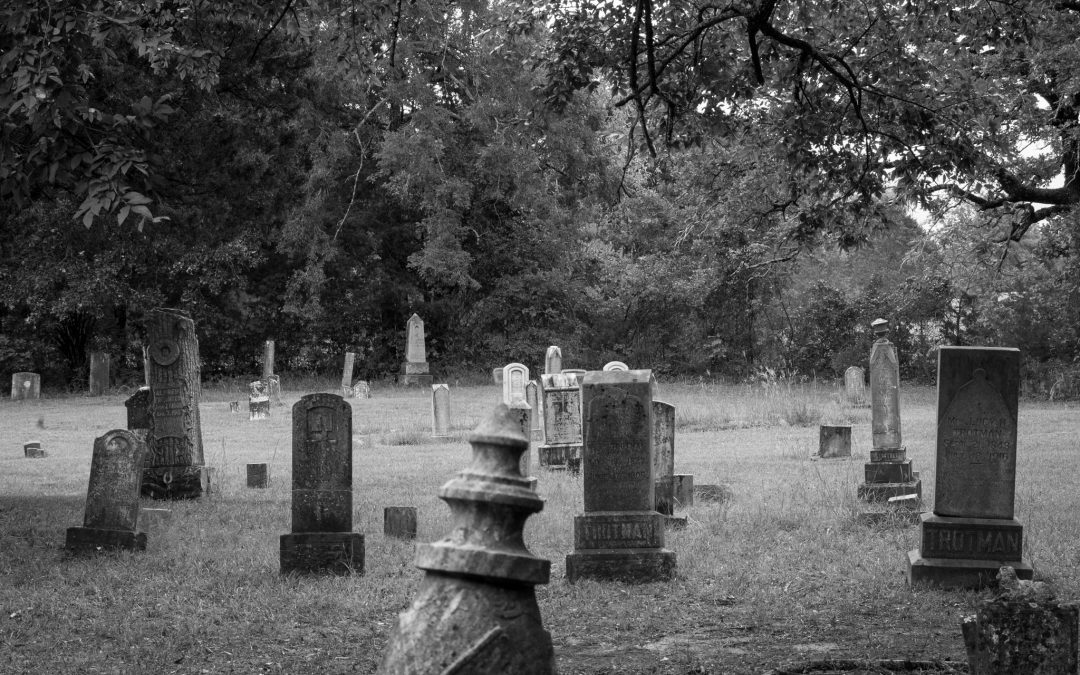
And years later, after almost dying of palladium poisoning, after he discovered a new element, and long after the dust of the Battle of New York had settled, Kendis and Tony walked through the cemetery hand in hand. He looked at the large gravestone that had replaced the small placard that had once been there.
His finger traced the words that had been engraved in the stone.
Henrietta Ferguson
Born: June 23, 1918
Died: February 19, 1981
In Memory of a Loving Mother
“Hi, Grandma,” Tony said as he placed a bouquet of white roses on the grave. “My name is Tony. Nice to meet you.”
Kendis squeezed his hand, and for the first time in his life, Tony felt truly at peace with who he was.
Translations:
“One day, I will take you there. You will breathe the air of your ancestors and walk in their footsteps.”
Discover more from With This Ring
Subscribe to get the latest posts sent to your email.